Hypostomus cirrhosus
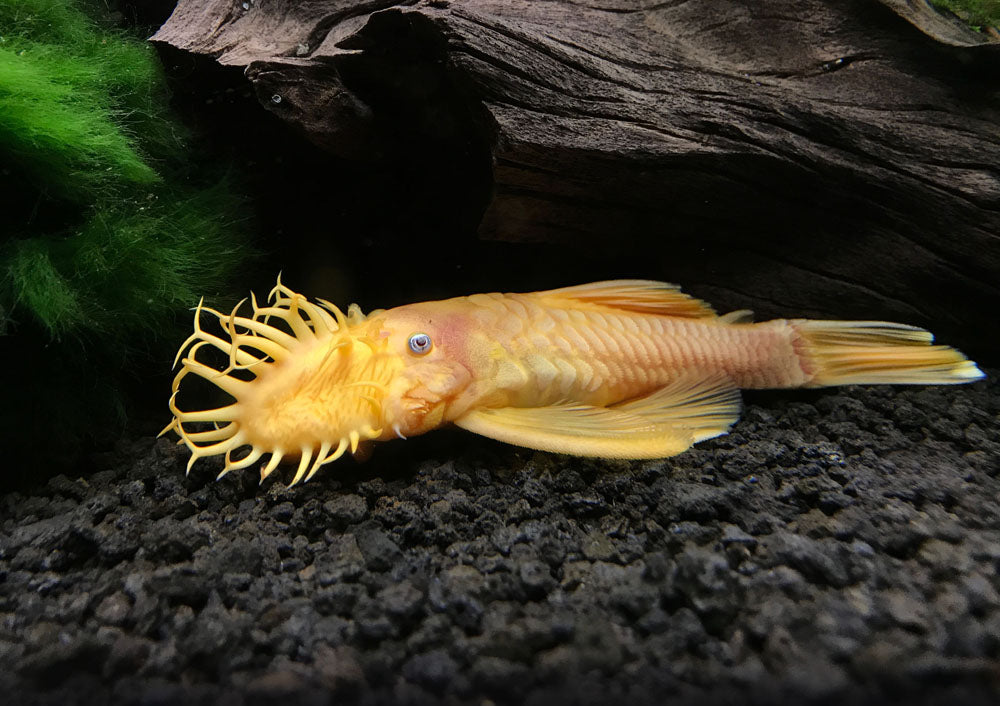 The bristlenose pleco is one of the most common types of catfish in the freshwater fish keeping hobby. They are known for their bushy noses and cleaning the algae off the glass of the tank. They can be slightly territorial towards other plecos but are usually a peaceful species to keep in a community tank.
 Average size: 6 in
Lifespan: 7-10 years
Territorial: Only towards other
males of the same species
Diet: Omnivorous
Activness: Mostly Nocturnal
Level: Beginner
Description: Bristlenose plecos are so common they have their own system of species type called the L catalog. The most common type I see is the albino which does not have a specific L number, however, the closest one is the L144 (blue-eyed lemon). The males are typically bigger in size than the females and are the ones who sport the well known bristles on their noses which act as feelers for food in the substrate. Females are more round in the belly and typically have rounder mouths as well, lacking bristles although it is not uncommon for them to have a few.
Bristlenose plecos are different from common plecos in that they do not grow to enormous sizes like the common and typically stay at around 6-7 inches when mature. Males usually find a spot hidden in caves or rocks and call that their home. They are usually inactive during the day and come out at night looking for food. It is important to have pleco caves in the aquarium, especially if you want breeding to occur, as they require this for egg development.
When mating occurs, the female will make her presense by hanging around the males cave until she eventually lays her eggs inside while the male fertilizes. The female will leave and continue her business looking for food and just swimming about while the male is the one who takes care of the eggs. He guards them deep within the cave and fans them with his pelvic fins so that they receive plenty of oxygen. As they begin to hatch, he remains on guard and protective of his cave by fanning his fins to rid debris and other fish while the fry practice swimming with their little yolk sacs still attached to their bellies. When the yolk sac is gone is usually when they leave the protection of their cave and start feeding on detritus in the tank.
Tank mates can include any other species of top and middle dwelling community fish, however, they are aggressive towards other plecos if males are kept together. Even in large tanks, I have had my larger pleco attack and kill other males in the tank so to be safe, one male per one to two females is recommended.